2-Days in Gwalior: From History to Heritage




In the sweltering heat of June, we hopped on a train from Delhi to explore Gwalior, a city known for its rich heritage and an epicentre of Indian history and culture. Staring out of the train’s window seat, I did a quick search on Gwalior and stumbled upon so much beyond the majestic Gwalior Fort and the opulent Jai Vilas Palace. The rich heritage and culture are beautifully intertwined with its musical legacy.
Designated as “UNESCO Creative City of Music in 2019”, Gwalior is home to musical maestro Tansen. Gwalior Gharana, one of India’s oldest musical roots, traces its roots to rich Hindustani classical music. From ancient temples to historical architecture to stories about musical legend Tansen, Gwalior is one of the less-travelled heritage cities. Two days in Gwalior is enough to experience the cultural nuances and architectural marvels of the city – although I would recommend visiting during winters for a more comfortable experience.
Table of Contents
City of Tansen – Musical Roots of Gwalior
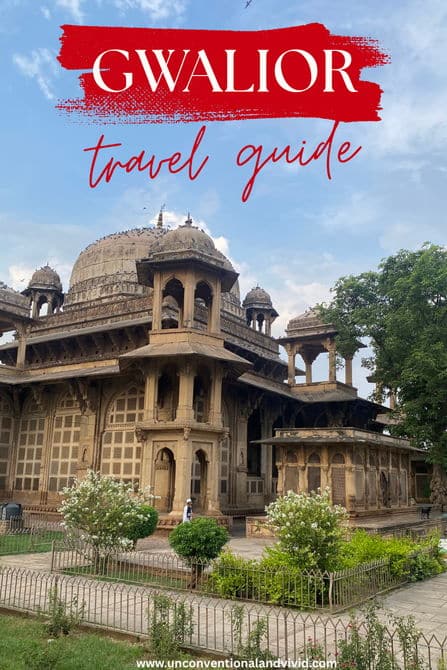
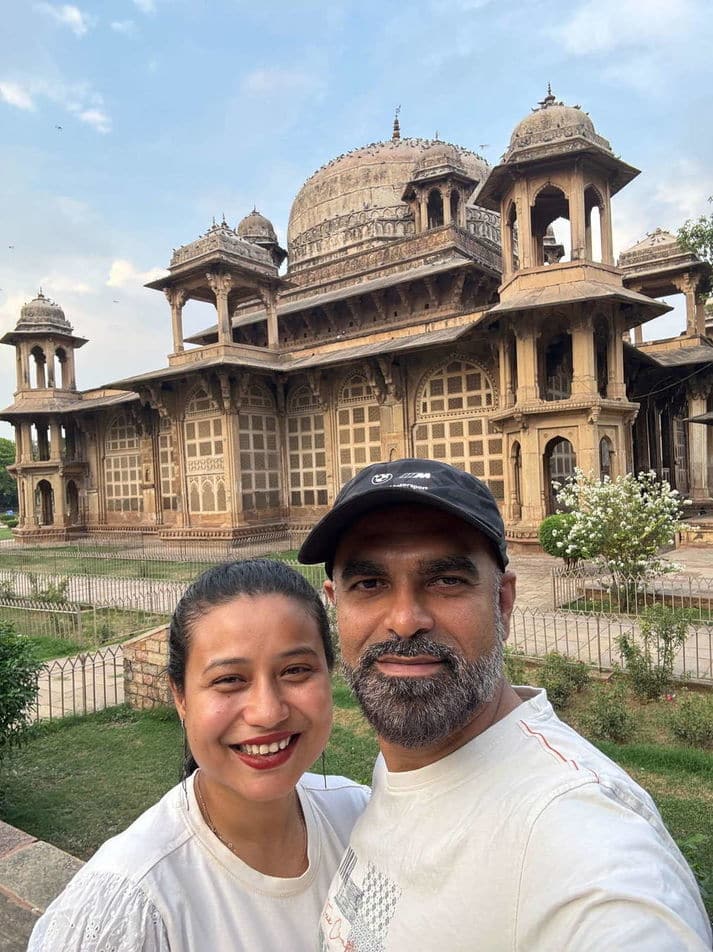
Little did I know that the city held a rich lineage of Hindustani classical music. The Tombs of Mohammad Ghaus and Tansen, nestled within a park on the eastern side of the old city, trace the musical heritage that has gently echoed through Gwalior for centuries. As we walked past the ASI signboard and through the gates, the tomb of the 16th-century Sufi saint Mohammad Ghaus glowed in shades of yellow and gold, bathed in the soft evening sunlight. From time to time, a flutter of pigeons rose from the dome, circling against the quiet sky as their gentle coos filled the air.
Known as one of the nine gems in Mughal Emperor Akbar’s court, the legacy of Tansen is immortal. Lore says, so powerful was his voice that he could summon rain with the Megh Mallar Raga. Born as Ramtanu Pandey, he received his traditional music training from his guru Swami Haridas and got the honorific title of Tansen from Raja Vikramjit of Gwalior.
As we walked around the tombs, we met a few locals who told us stories of Mohammad Ghaus and Tansen. The 16th-century Sufi Saint, Mohammad Ghaus, not only predicted Tansen’s birth, but also influenced Sufi-Inspired musical roots in Tansen. In the park, the bigger tomb is Mohammad Ghaus. Built with sandstone, the tomb has a bigger central dome and smaller domes on all four corners. The intricate stone-carved lattices (Jhali) are one of the striking architectural features adorning all sides.
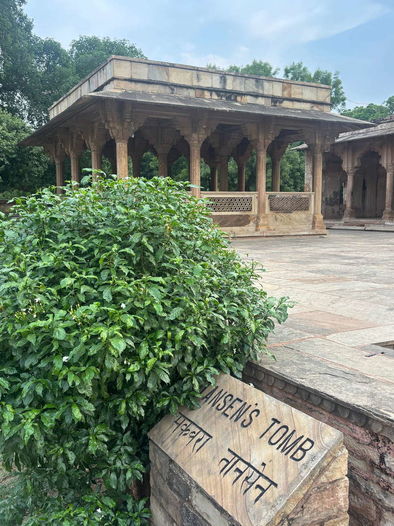
Adjacent to the bigger tomb lies the tomb of Tansen – a square pavilion with pillars surrounding it. Also, housed in the same complex is a Tamarind tree, and it is believed that anyone who chews its leaves is blessed with a beautiful, clear voice. Apart from Tansen Tomb, the park is also home to the burials of many followers and disciples of Mohammad Ghaus.
Through the royal walls of Gwalior Fort
Overlooking the city, the stunning sandstone fortress stands atop a hill; it is a living chronicle of India’s rich history. The fort has witnessed the rise and fall of empires, yet has stood the test of time. Also known as “The Gibraltar of India” and described as “the pearl among the fortresses of Hind” by the Mughal Emperor Babur, the fort stretches for 3 km across a plateau.
According to local folklore, in the 3rd century, a chieftain named Suraj Sen suffering from leprosy was cured by a sage named Gwalipa, who offered him water from a sacred pond. Filled with gratitude, Suraj Sen built a fort and named it “Gwalior” after the sage. The sacred pond, known as Suraj Kund, still exists within the fort complex. Over centuries, the fort has seen different empires and rulers come and go, passing through the hands of many powerful dynasties.
Inside the fort are some of Gwalior’s most remarkable architectural marvels:
Man Mandir Palace
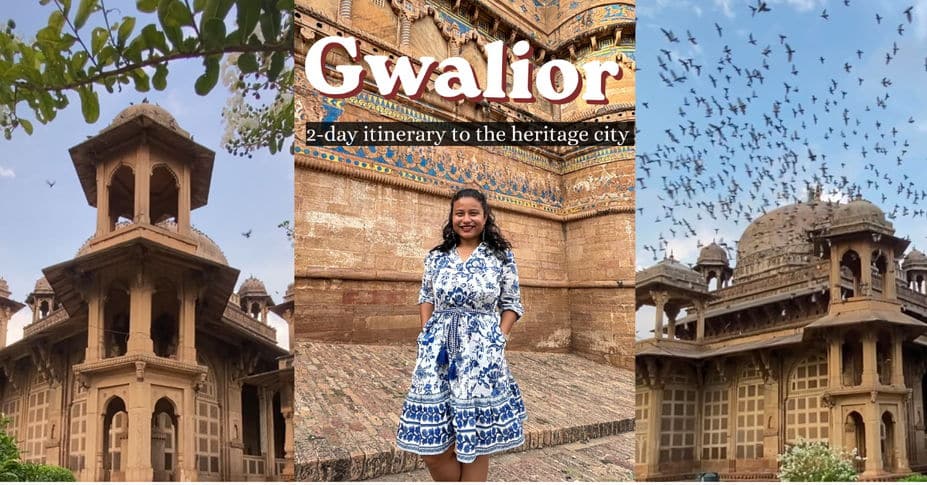
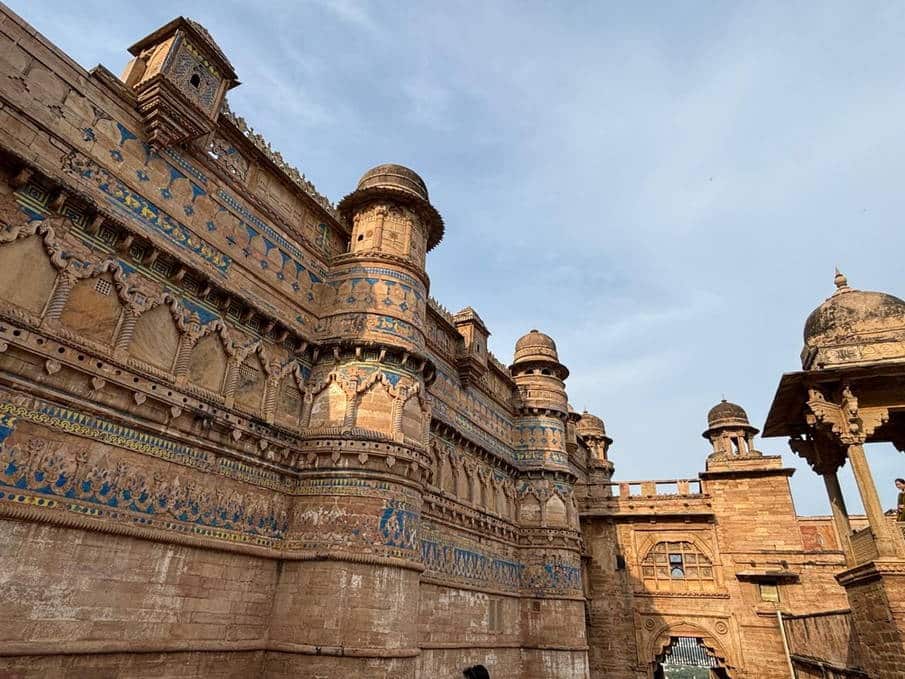
As you enter the fort complex, you are graced by the magnificent palace built by Raja Man Singh Tomar in the 15th century. The sandstone palace looks vibrant with its exterior walls adorned with vibrant turquoise, yellow and green glazed tiles. Along the massive walls, the cylindrical bastions crowned with domed cupolas lend a striking silhouette. The palace’s vibrant façade is adorned with intricately carved jharokhas, delicate lattice screens, and ornamental friezes of ducks, elephants, crocodiles, and peacocks, reflecting the exceptional craftsmanship of the 15th-century artisans. Inside, a maze of courtyards, royal chambers, carved pillars, and audience halls offers a glimpse of bygone medieval grandeur.
Teli Ka Mandir
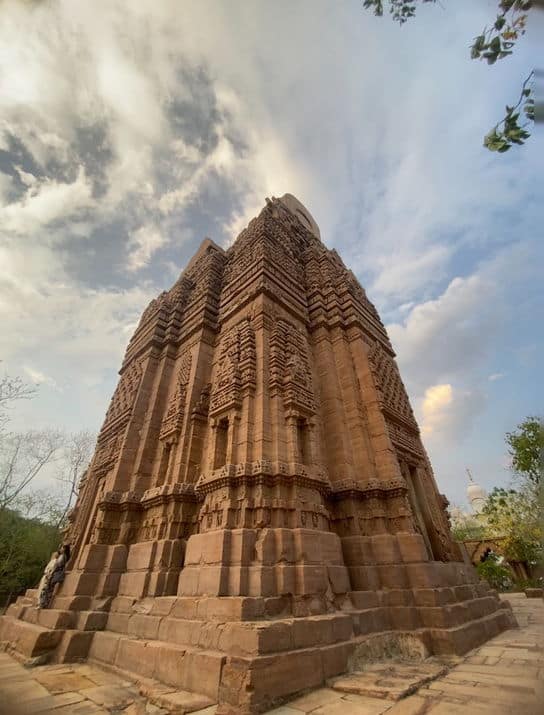
Standing nearly 30 metres tall, this ancient temple dates to the 8th–9th century and was built during the Gurjara-Pratihara dynasty. Dedicated to Lord Vishnu and later associated with Lord Shiva, it is celebrated for its unique fusion of North and South Indian architectural styles. The striking combination of a Dravidian-style vimana with intricate Nagara-style carvings makes it one of the most distinctive temples in India. Its walls are richly adorned with divine figures, floral motifs, mythical creatures, and goddesses, showcasing remarkable artistry. The highly ornate entrance is crowned by an impressive relief of Garuda, the celestial mount of Lord Vishnu
Saas Bahu Temple
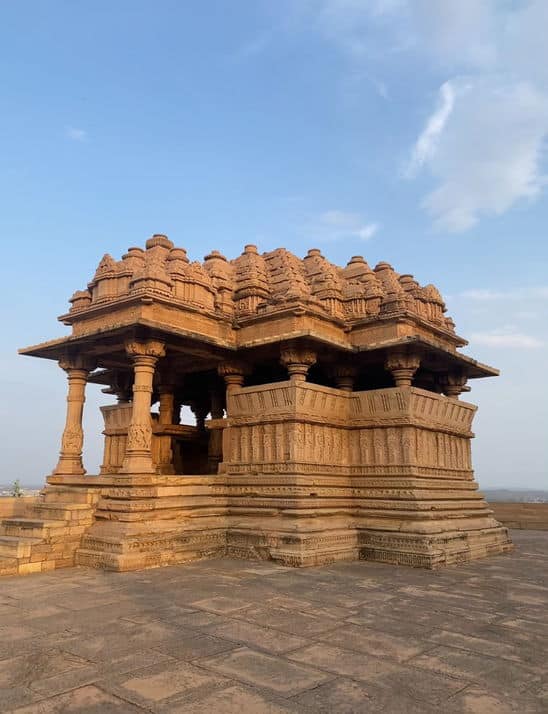
The temple derives its present name from its original name, Sahastrabahu, an epithet of Lord Vishnu meaning “the thousand-armed one.” This magnificent 11th-century twin temple complex was built by King Mahipala in 1093 AD and dedicated to Lord Vishnu. The larger and smaller temples, now popularly known as the Saas and Bahu temples, are known for their exquisite Nagara-style architecture. The temple has intricately carved pillars, ornate ceilings, perforated stone screens, and sculptures depicting scenes from Hindu mythology. The walls are carved with floral patterns, celestial figurines, and geometric motifs, while the beautifully carved entrance lintels portray episodes from Lord Krishna’s life.
Chaturbhuj Temple
Hidden inside Gwalior Fort, the Chaturbhuj Temple is also known as India’s “Zero Temple” – housing one of the world’s oldest recorded zero symbols. Built in the 9th century under the Pratihara rule, the temple is dedicated to Lord Vishnu and is known for its mathematical legacy. Carved into a sandstone rock face, the temple has a pillared entrance with a small mandapa and Nagara-style shikhara.
Rock-cut Sculptures at Gopachal Parvat
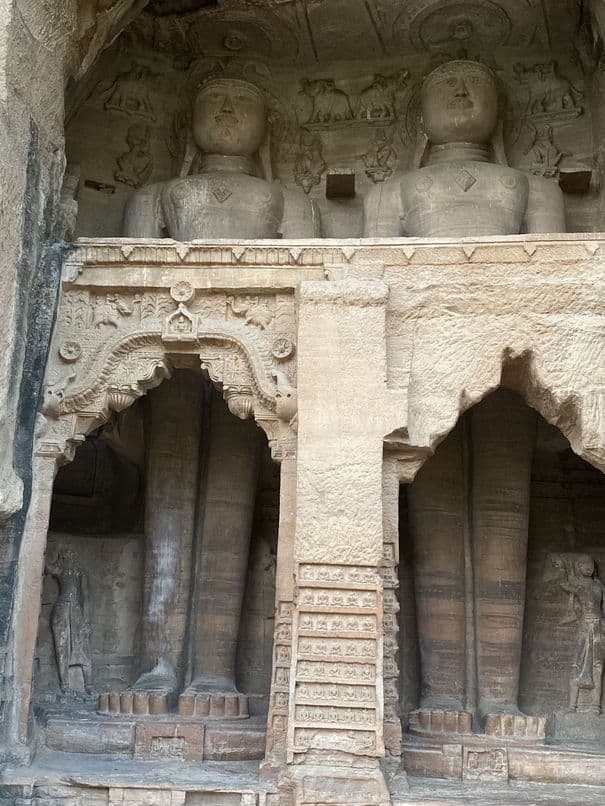
As you start ascending the hill road towards Gwalior Fort, you cannot miss the rock-cut Jain sculptures of Gopachal Parvat. On both sides of the road, entire cliffs of sandstone present an open-air gallery with giant sculptures carved directly into the steep rock faces. The most extensive Jain carvings at Gopachal were created during the 15th century under Tomar rule. The scale of the sculpture is extraordinary, with the largest figures at almost 17 meters.
Jai Vilas Palace Museum
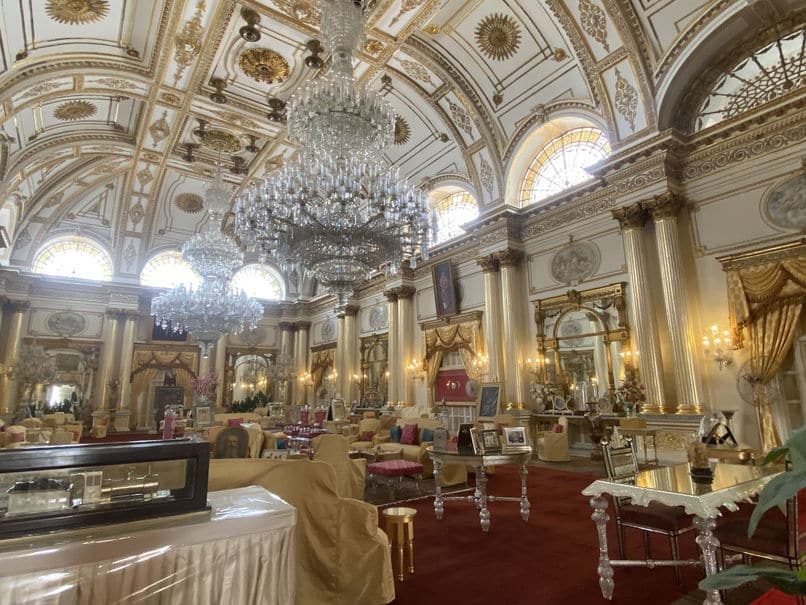
One of the most iconic museums of India, it preserves the legacy and history of the Scindia dynasty. Built in 1874 by Maharaja Jayajirao Scindia, it’s a part of the royal heritage, and the palace was designed by British architect Sir Michael Filose. A mix of Italian, Tuscan, and Corinthian architectural styles, the residence is nothing short of European-inspired grandeur. A symmetrical façade with an elegant colonnade adds to the palace’s exuberance.
Today, almost 25 museum galleries are open to visitors, giving a glimpse of timeless luxury. The magnificent Durbar Hall is one of the most breathtaking spaces, where the king and his court men used to hold formal meetings back in the day. Scintillating in intricate gold patina work, the roof illuminates the hall in a soft glow. The gilded ceilings, ornate stucco work, and Belgian mirrors in the hall bring unparalleled grandeur. Two colossal chandeliers add to the enduring charm. One of the most famous attractions is the miniature silver train that moves across the tracks laid across dining tables, carrying decanters filled with drinks during lavish banquets.
Beyond Durbar Hall, the museum is living proof of royalty, where one can witness a remarkable collection of artefacts, vintage carriers, ceremonial weapons, paintings, furniture, hunting trophies, and personal belongings of the Scindia family.
If you just have two days and are looking to explore culture and heritage, Gwalior makes the perfect weekend getaway from Delhi. From the opulence of the Scindia dynasty to the glorious history and heritage dating centuries back, Gwalior is the quintessential cultural melting point that deserves more attention.
PIN FOR LATER